
Breast Cancer Q&A

Breast Cancer Q&A
I’ve rounded up just a few of the many, many valuable questions I’ve been asked by my social media following about my breast cancer journey and experiences. There were so many to choose from that contain such important information – I wish I could share all of them! I picked the ones that stood out to me most to share with you today, but if you’re curious about a topic I didn’t cover here, I have several highlights on my Instagram that cover my diagnosis, chemo treatment, mastectomy and more.
Below, some frequently asked questions I’ve received about my journey with breast cancer.

Diagnosis and Initial Findings
Q: Did you feel unwell before your breast cancer diagnosis?
A: No, I felt great. I was exercising regularly, eating a healthy diet, and had zero signs of anything wrong. The diagnosis began when I felt a lump (March 26) and subsequently had a mammogram, ultrasound, and biopsy.
Q: Were you alerted to lumps by self-exam or mammogram?
A: The first lump I found by self-exam, accidentally, while applying lotion. It was a very hardened area on the upper left breast. The second tumor (similar size, but lower and deeper in the tissue) was not detectable by self-exam and was only found later on the MRI.
Q: Did you get an oncotype test?
A: I did not. Oncotype tests typically help determine treatment early on only if the cancer is not HER2 positive. My cancer was estrogen, progesterone, and HER2 positive, and most cancers of this type and my tumor grade needed chemo.

Chemotherapy: Logistics, Side Effects, and Support
Q: Why did you have chemo before surgery?
A: This is often done with triple-positive breast cancer for several science-backed reasons:
Tumor size: Chemo can shrink large tumors, potentially making breast-conserving surgery (lumpectomy) possible instead of a mastectomy.
Lymph nodes: It can reduce the extent of disease in lymph nodes, allowing for less invasive lymph node surgery.
Cancer response: Doctors can see how the cancer responds to the first set of drugs.
Cancer spread: It can kill cancer cells that may have spread but can't be seen on imaging tests.
Cancer recurrence: It can lower the risk of cancer returning, potentially extending life.
Q: How would you describe what things taste like while on chemo?
A: It's a dulled sense; everything tasted 'off' because the taste buds are dying off. The tongue can feel like sandpaper, and salty things can hurt. This happens around day 4 or 5 through about day 10-12 of each cycle. Taste returns in between cycles. I found peanut butter to taste fairly similar the whole time. Losing the joy and comfort of food was one of the hardest parts of chemo.
Q: What did you drink to stay hydrated?
A: Citrus flavored LMNT mix with water and lots of ice, and Suja Organic juices work well. A water bottle with different electrolyte flavors is helpful, as it takes trial and error to see what will taste okay!
Q: What was something that surprised you about your treatments?
A: I had no idea the huge range of symptoms and how the treatment affects your whole body. It was a huge life change. I remember being amazed that people are able to work, care for children, and function during this process.
Q: Anything you wish your care team had done differently?
A: I wish I was better prepared for some of the side effects. I experienced very real depression symptoms coming off Dexamethasone (a steroid) and didn't realize it. I wish I had known that tapering the dose more slowly was an option. There was a traumatic experience with a less-experienced nurse trying to access my port.

Mastectomy, Reconstruction, and Recovery
Q: What made you decide to do reconstructive surgery vs. wearing prosthetics?
A: It was important to me to feel as close to 'normal' as I can after a mastectomy. I chose a surgical team who does additional sensation preservation (nerve grafting) and has nipple and skin sparing, direct to implant bilateral mastectomy. Not every woman gets to choose these things; options are often based on cancer stage, grade, insurance, and surgeon.
Q: Any specific questions to ask the surgeon when discussing a mastectomy after chemo?
A: Ask your surgeon for their general plan or the one to two best options, as they will narrow it down based on your cancer type, stage, size, location, and anatomy. It’s helpful to see photos of similar cases before and after. If you are interested, ask about possible nerve preservation techniques.
Q: Are you concerned about breast implant illness in the future?
A: I am not concerned personally. It's estimated that around 1% of women experience this, and if it were to become an issue, the implants could always be removed and a different kind of reconstruction could be discussed.
Q: Advice for first few post-op days to ensure smooth recovery?
A: A few things that helped me:
Set up your bed with all the possible pillows/wedges or use a recliner for comfortable sleep.
Record all medication and when it's taken, and have someone on top of this.
Get a few different compression bra options and a drain belt.
Drink lots of water; electrolyte mixes help!
Start taking a dose of Miralax every day after surgery.
Stay ahead of pain meds, and have nurses teach you drain care.
Q: Anything you recommend to bring to the hospital for the 1-day overnight (for mastectomy)?
A: What helped me:
Bring loose pants (not leggings) and a button-up shirt to wear home.
Bring your own pillow to use between you and the seatbelt on the way home.
An electric toothbrush and a bag with toothpaste/wipes.
Multiple compression bras—a larger, comfortable one is great for clipping the drains.

Emotional Well-being and Support
Q: Did you have an angry phase?
A: I definitely had days where I felt the 'why me?' feeling, especially coming to terms with losing my hair, going through procedures, and having my body altered. Anger hasn't been a primary, long-lasting feeling. I find gratitude in small things every day to get through the difficult days.
Q: What did home life look like for you and your family?
A: Some things were very 'normal' for us throughout this process (school, camps, sports). Friends and family helped so much when I needed to rest. My husband's work is flexible, so he could be home when I just needed company.
Q: What help was most beneficial from your friends?
A: A few things went a long way:
Texts from friends that asked how I was feeling, offering to let me cry or just vent, and being available without expecting much back.
Texting to offer to bring food or a smoothie, and offering to take my girls for play dates.
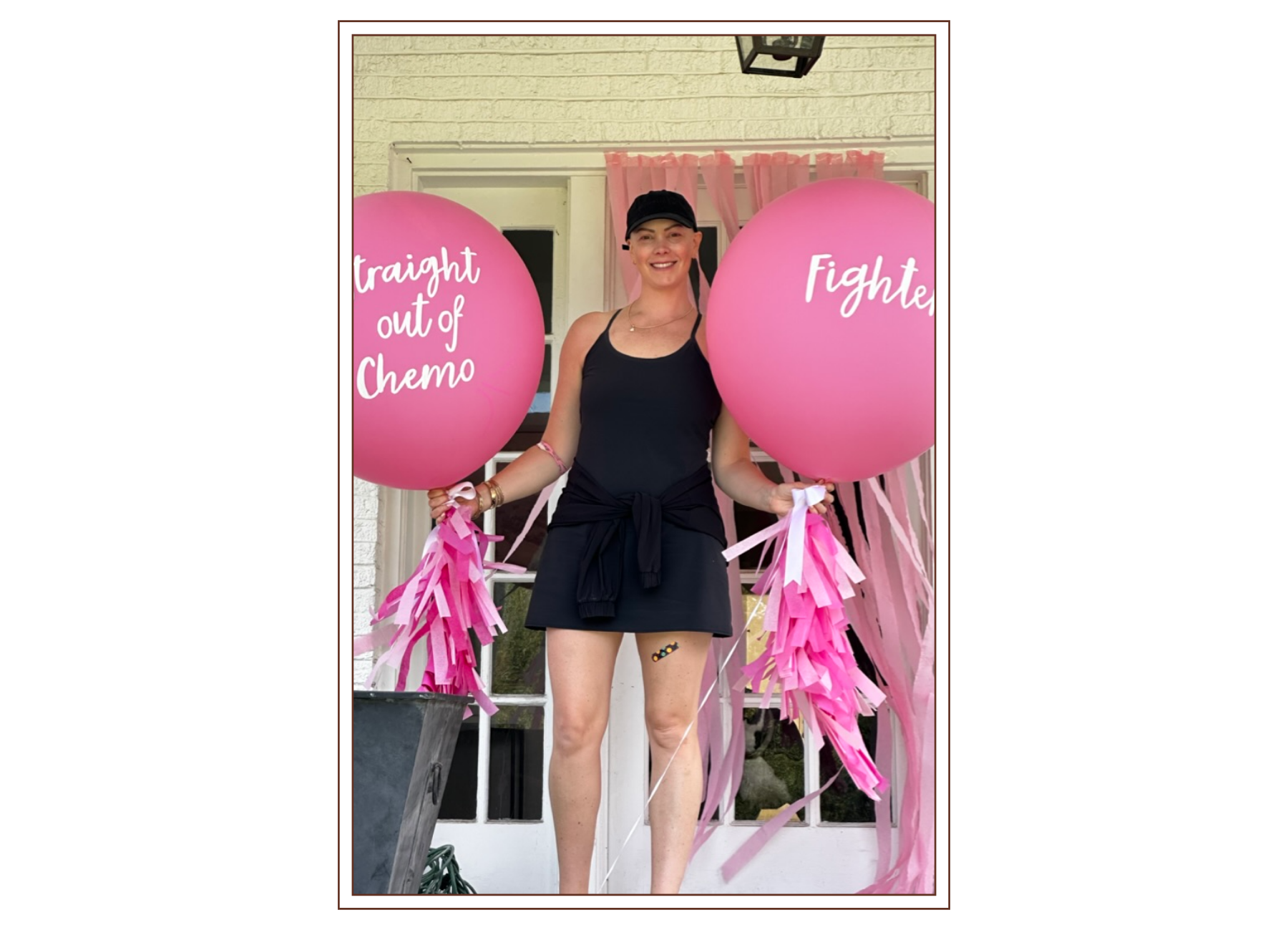
Showing up at chemo with a hug, sending flowers, and decorating the porch after the last treatment.

Holistic Approach, Causes, and Future Outlook
Q: What changes have you made because of this journey?
A: My philosophy is that no single thing caused my cancer, and I lived a healthy life. I already lean towards eating healthy whole foods, avoiding chemicals, and artificial ingredients. I will continue living this way, but not in fear. I want to create the healthiest environment for my girls, so I'm cleaning up our household and beauty products even more due to research showing hormone disruptors can cause many issues.
Q: Did the doctors mention during this journey what can cause this? Deodorant? Anything?
A: I wish we knew exactly what causes cancer, but we don't. Before my diagnosis, I was a health-conscious person. I think you can drive yourself crazy trying to blame one thing or rid your life of all possible toxins. I plan to continue being healthy, adding in more nutrient-dense foods, but stressing about every item in our homes and living in fear is one way to also damage your health and well-being.
Q: Did you research holistic options vs. 'standard of care' (surgery and drugs)?
A: Yes, I'm a big researcher. For my aggressive tumor, I chose to trust my doctors and pursue chemo and surgery. I also added acupuncture, kept a healthy diet, and will add an integrative doctor to my team for long-term recovery. I don't believe it's right to imply someone should have 'researched' more. If someone is in active treatment, they've done their research and should be at peace with their choice for care.
Q: How did you handle work through all of this?
A: I'm very fortunate to have an amazing team that handled everything at the company, so I was able to focus on recovering from chemo at home while they managed the operations, marketing, retail, production, and all that goes into the business.
Q: Where do you see your life in 10 years?
A: I visualize often that I’m living a healthy, long, cancer-free life. I hope to continue to be a resource and support to women going through this. I hope to be settled in a finished home addition, reading an article about how far they've come in treating and curing cancer of all types and stages.


The Best Gifts for a Loved One Facing Chemo
I regularly share my outfits, bargain finds and investments on my Instagram. Follow along here if you’d like to see more! And never hesitate to DM me with a question or if you’re on the hunt for something, the only thing I love more than shopping for myself is shopping for someone else!
+My latest finds here.
+Shop my signature stack.
+Six things I wish I knew before starting chemo.
