
My Final Reconstructive Surgery

My Final Reconstructive Surgery
I had my (hopefully) final breast reconstruction on January 12th. This surgery involves liposuction of certain areas to harvest fat, which is then used around the implants to soften the look and feel, making the results more natural. Some women choose to do this and some don’t; it’s certainly not mandatory, but it is typically covered by insurance. However, not every woman is a candidate for this surgery depending on her body type.

My mastectomy was in October 2024. I traveled to California for a specific type of sensation-preservation surgery with Dr. Anne Peled and Dr. Ziv Peled. I was able to do a direct-to-implant procedure in one surgery and was really happy with my experience overall. After about six months, as everything settled, I noticed some areas were more sunken and some rippling appeared through the skin from the implants. I decided to do my second surgery here in Nashville with Dr. Mae Yang, who came highly recommended by friends who had worked with her for reconstruction.
Prep:
I started off the year eating healthy and avoiding alcohol for a few weeks after the holidays to prepare my body. During my pre-op appointment, we discussed the ideal areas for liposuction and decided on my outer thighs, stomach, and flanks. My surgeon also recommended swapping my original Sientra implants for Motiva implants for less rippling and an even better long-term safety profile.
The Morning Of:
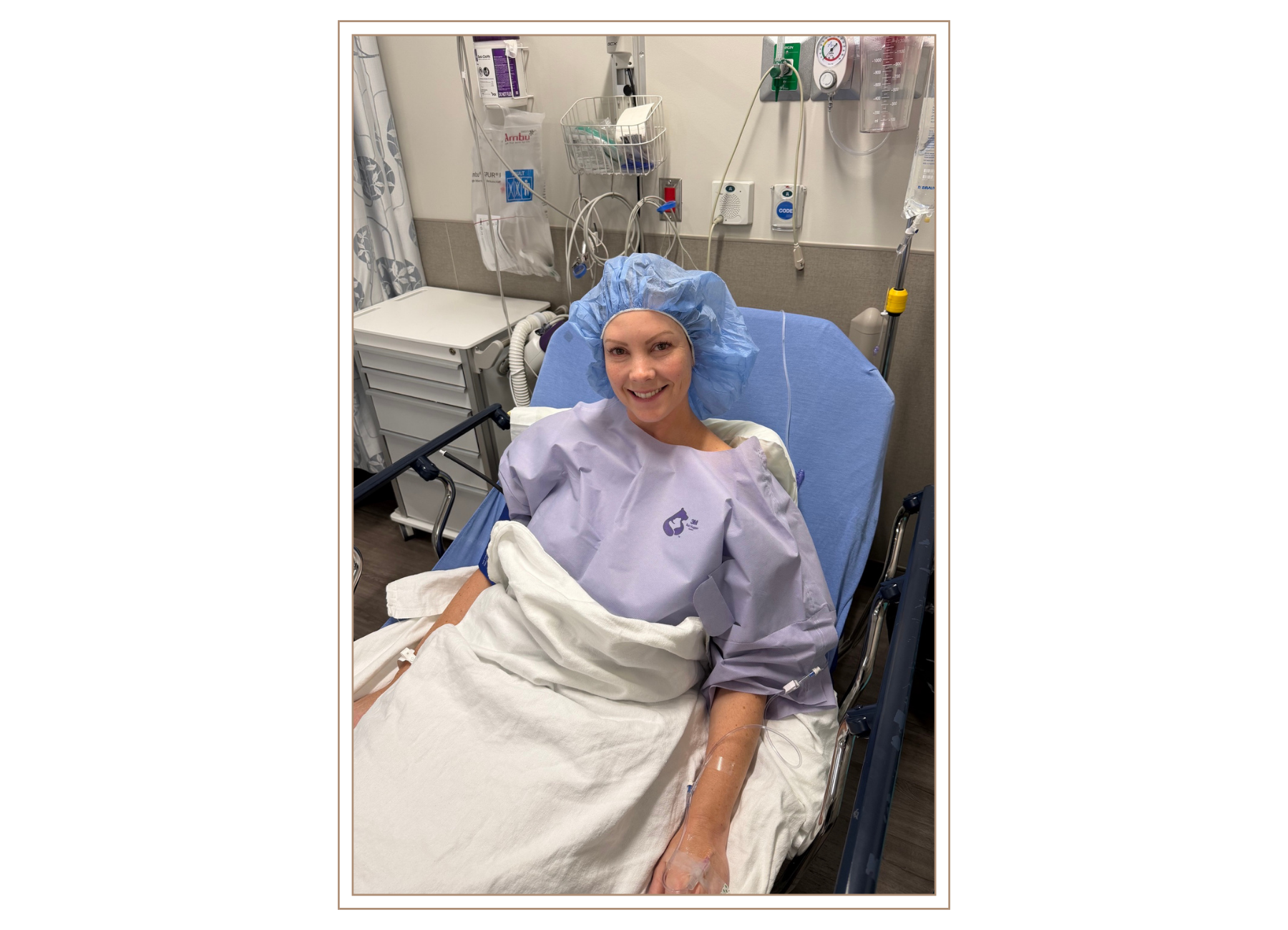
The morning of surgery, I arrived bright and early to be prepped with an IV and marked for the operating table. We arrived at 6:00 AM and started around 7:00 AM; I was coming out of anesthesia between 8:30 and 9:00 AM and was in the car heading home by 10:00 AM. I am fortunate that I typically react well to anesthesia and didn’t experience any nausea afterward. I had prepared myself to feel emotional, as I did before my mastectomy, but this surgery felt more relaxed. I was very excited to get through it and finish my reconstruction process. I was able to get into a wheelchair and step into the car immediately after surgery. I slept most of the day at home, getting up only to move around before returning to bed with pain meds to rest.
Recovery + Healing:
The first few days were uncomfortable but not terrible. I had plenty of medication for the pain and rested in bed for the first 24 hours, though I was still able to walk around. Recovery depends on where you have the liposuction. Because my stomach, waist, and outer thighs were sore, I slept on my back and used compression around my thighs and a belly binder. I also had incisions from the implant exchange, but it was not as intense as the mastectomy; I didn't struggle as much with using my arms to sit up, and it got easier by the day. I was able to shower after 24 hours with my back to the water since my incisions had waterproof dressings.
For the first week, I wore the belly binder and compression shorts 24/7. I recommend having a few pairs on hand; the kind with very soft edges are best because it can be painful to pull them up over your legs and stomach. Eventually, I moved to these, which had a little more all-over compression and came up higher, avoiding the soreness around my waist.
Helpful recovery items:
Soft ice packs: Great for various sore areas.
Loose clothing: Wide, loose sweatpants are easy to pull on over Spanx and a belly binder. This set from Gap was perfect.
Comfortable layers: I wore my favorite Frank & Eileen black fleece Catherine pants so many times; they look a little more put-together with a sweater and flats.
I knew going into this that it wouldn’t be the easiest recovery. While the pain was never unbearable, the discomfort from liposuction lingers for quite a while. I am now one month out and still have soreness at the harvest sites. You can get little “zings” of pain as the nerves repair themselves deep under the skin.
One week after surgery, I had a lymphatic drainage massage with a professional trained in post-surgical care to help move the fluid and swelling. I’ve booked one about once a week and feel they’ve made a significant difference. I also used my vibration plate (with my feet close together on a low setting) once a day to help with drainage.
You must avoid aerobic workouts, saunas, and hot tubs for about six weeks. I was able to start taking longer walks about two weeks after surgery. Healing has improved each week, though there is still fluid and swelling that will take 2–3 months to fully resolve. Only about 50–60% of the grafted fat stays—the rest is reabsorbed—so the final results take a while to settle in.
I have heard of women doing this surgery more than once to get their desired results, but I’m hopeful this was my only time. With my sensation-preservation surgery, I had regained a good amount of feeling. I was told there might be a "setback" in sensation after this second procedure, but it should return after healing. There is also some tingling and numbness at the liposuction sites that should fade over time.

It’s amazing what our bodies go through with these surgeries, and I’m very grateful for these techniques that help me feel more like myself again. I am feeling more and more like my "old self" now that I'm almost two years out from my diagnosis, chemo, and mastectomy.
If you have a friend going through this, a great way to support them is by checking in or dropping off a meal for their family. Having friends over for coffee or going on slow walks is also a nice way to start moving again.
I’m always happy to answer specific questions about my surgery experiences via DM on Instagram—feel free to reach out there!


I regularly share my outfits, bargain finds and investments on my Instagram. Follow along here if you’d like to see more! And never hesitate to DM me with a question or if you’re on the hunt for something, the only thing I love more than shopping for myself is shopping for someone else!
+My latest finds here.
+The ritual of tea.
+Intentions for 2026.
